BMP
How much mulch do I need?
All mulch bags: 2 cubic feet. Pallet breakdown uses 65 bags per pallet.
Pallet coverage comes from your selected variety. Minimum order: 1 pallet. Quantities round up to whole pallets.
Compost topdressing: 1 cubic yard per 1,000 square feet.
My mulch project


BES-TEX Supply, LLC
325.653.1300
BES-TEX Best Management Practices · Weed Control
Pre-Emergent Herbicides for Lawns
Stop weeds before they start
A pre-emergent works before weeds come up. Here’s how to get the most from it.
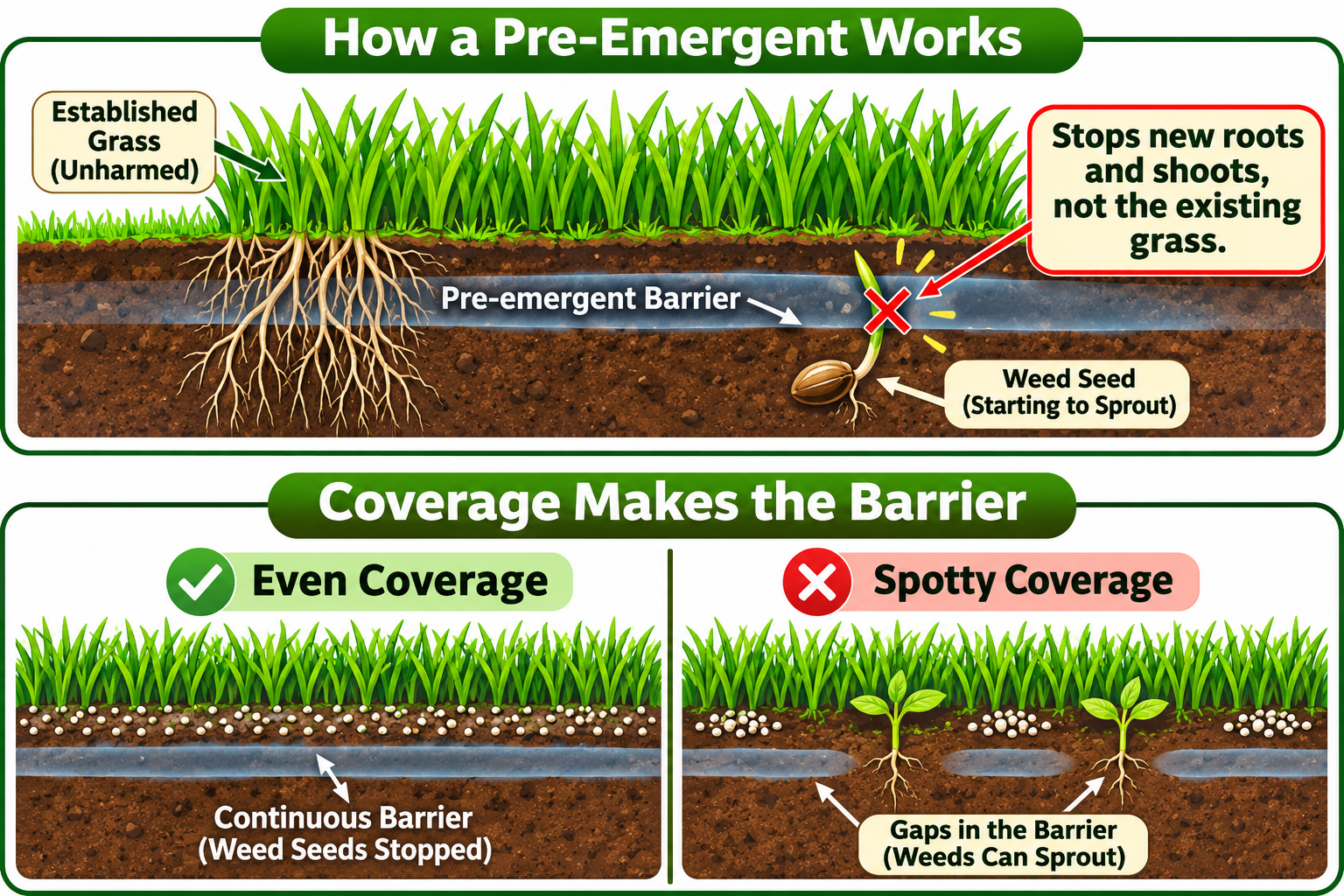
8 Steps to Better Weed Prevention
What Pre-Emergent Does
A pre-emergent prevents weed seeds from germinating.
It does not kill the existing plant. It stops the new root and first leaves of a germinating weed seed. That is why it is so important to get the pre-emergent into the soil, where it forms a barrier.
It won’t kill weeds you can already see. For those, see our post-emergent guides, like our Bermuda post-emergent guide.
Timing
Timing matters more than anything.
Apply before weed seeds germinate.
Simple rule: apply in the first of February, the first of May, and the first of September.
Even Coverage Matters
Apply it evenly across the whole lawn.
Smaller Particles Work Better
The smaller the particle, the better it works.
Granular vs. Liquid
Pre-emergent comes in granular and liquid forms.
Which one you use depends on the application tools you have. Homeowners typically use a granular product. Liquid is the other option.
With liquid, pros can cover more square feet per tank, but it must be watered in with as much water as possible. A pump-up sprayer doesn’t do a very good job unless you can water it in with your irrigation system or an extra hose.
Split Applications
Split applications extend how long you’re covered.
In the springtime, split applications are typically spaced 30 days apart.
Water It In
Pre-emergent has to be watered in after application.
Don’t Disturb the Soil Surface
Don’t disturb the soil surface after application.
Works the same on every lawn. A pre-emergent doesn’t pick and choose. It stops any germinating seed, whether it was dropped by a bird, spread by you, or carried in by the wind. That means there are no turf-specific differences for pre-emergent, unlike post-emergent, where your turf type matters.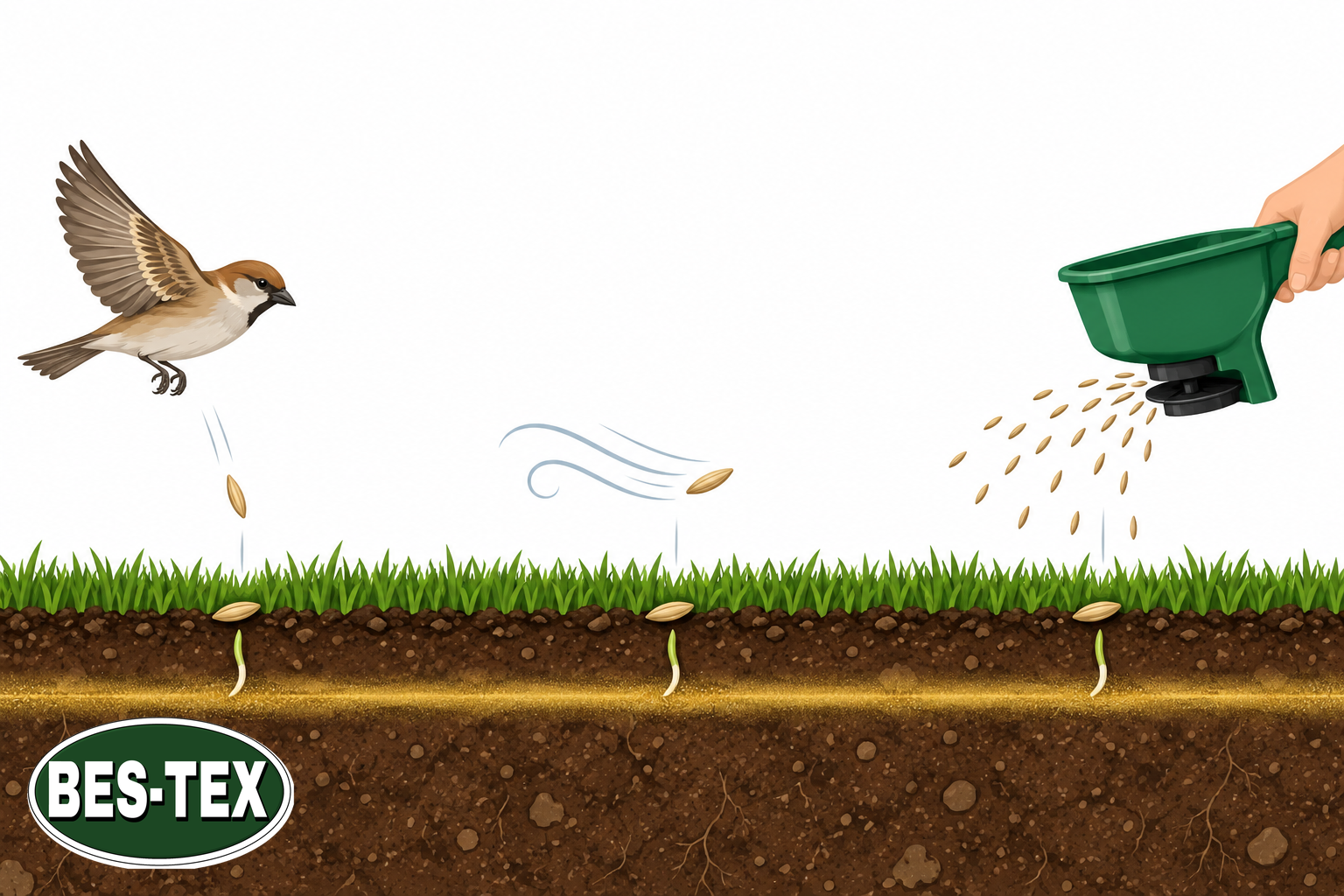
Need Help With Your Weeds?
Stop by BES-TEX or give us a call. We’re glad to help you pick the right product and get it on right.
BES-TEX Supply, LLC
325.653.1300
BES-TEX Best Management Practices · Weed Control
Post-Emergent Herbicides for Zoysia Lawns
For Zoysia lawns only · Broadleaf weeds you can see now
You’ve used the broadleaf weed ID guide to identify the weed in your Zoysia lawn (including its germination and seed timing), and you’ve confirmed it’s visible now.
Here’s how to treat it.
Section 1
Broadleaf Weeds in Zoysia
8 Steps to Better Broadleaf Control
Selective vs. Non-Selective
Selective herbicides kill broadleaf weeds and leave your Zoysia alone.
Non-selective herbicides kill everything they touch, including your grass.
Mode of Action
Mode of action is how the chemical moves through the plant.
Treat Weeds While They’re Young
Spray weeds while they are young and tender, not after they are mature. Young weeds are much easier to control.
Mixing a One-Gallon Sprayer
- Add a half gallon of fresh, good-quality water first.
- Add the exact herbicide dose listed on the label.
- Put the lid on and shake well.
- Add the remaining water.
Always Add a Surfactant
A surfactant breaks the surface tension of water. That lets the spray spread out across the leaf instead of beading up and rolling off.
Spraying Technique
Hold the wand 12 to 18 inches off the ground and aim for about an 8-inch, dinner-plate-sized spray pattern.
Spray in the Morning
Spray in the morning, not the afternoon. At dawn the plant is drinking from its roots, which helps pull the herbicide into the plant.
Don’t Mow Right Before Spraying
Mow Saturday, spray Wednesday.
The goal is maximum leaf tissue on the plant, and keeping the herbicide on the plant as long as possible before the next mow.
Then return to your regular MWF (Mow, Water, Feed) routine and mow again.
Mow Zoysia at 2–3 inches.
[PLACEHOLDER: Zoysia-specific differences / grassy weeds, Monte to provide]
Need Help With Your Weeds?
Stop by BES-TEX or give us a call. We’re glad to help you pick the right product and get it on right.
BES-TEX Supply, LLC
325.653.1300
BES-TEX Best Management Practices · Weed Control
Post-Emergent Herbicides for St. Augustine Lawns
For St. Augustine lawns only · Broadleaf weeds you can see now
You’ve used the broadleaf weed ID guide to identify the weed in your St. Augustine lawn (including its germination and seed timing), and you’ve confirmed it’s visible now.
Here’s how to treat it.
Section 1
Broadleaf Weeds in St. Augustine
8 Steps to Better Broadleaf Control
Selective vs. Non-Selective
Selective herbicides kill broadleaf weeds and leave your St. Augustine alone.
Non-selective herbicides kill everything they touch, including your grass.
Mode of Action
Mode of action is how the chemical moves through the plant.
Treat Weeds While They’re Young
Spray weeds while they are young and tender, not after they are mature. Young weeds are much easier to control.
Mixing a One-Gallon Sprayer
- Add a half gallon of fresh, good-quality water first.
- Add the exact herbicide dose listed on the label.
- Put the lid on and shake well.
- Add the remaining water.
Always Add a Surfactant
A surfactant breaks the surface tension of water. That lets the spray spread out across the leaf instead of beading up and rolling off.
Spraying Technique
Hold the wand 12 to 18 inches off the ground and aim for about an 8-inch, dinner-plate-sized spray pattern.
Spray in the Morning
Spray in the morning, not the afternoon. At dawn the plant is drinking from its roots, which helps pull the herbicide into the plant.
Don’t Mow Right Before Spraying
Mow Saturday, spray Wednesday.
The goal is maximum leaf tissue on the plant, and keeping the herbicide on the plant as long as possible before the next mow.
Then return to your regular MWF (Mow, Water, Feed) routine and mow again.
Mow St. Augustine at 3–4 inches.
[PLACEHOLDER: St. Augustine-specific differences / grassy weeds, Monte to provide]
Need Help With Your Weeds?
Stop by BES-TEX or give us a call. We’re glad to help you pick the right product and get it on right.
BES-TEX Supply, LLC
325.653.1300
BES-TEX Best Management Practices · Weed Control
Post-Emergent Herbicides for Bermuda Lawns
For Bermuda lawns only · Broadleaf and grassy weeds you can see now
You’ve used the broadleaf weed ID guide to identify the weed in your Bermuda lawn (including its germination and seed timing), and you’ve confirmed it’s visible now.
Here’s how to treat it.
Section 1
Broadleaf Weeds in Bermuda
8 Steps to Better Broadleaf Control
Selective vs. Non-Selective
Selective herbicides kill broadleaf weeds and leave your Bermuda alone.
Non-selective herbicides kill everything they touch, including your grass.
Mode of Action
Mode of action is how the chemical moves through the plant.
Treat Weeds While They’re Young
Spray weeds while they are young and tender, not after they are mature. Young weeds are much easier to control.
Mixing a One-Gallon Sprayer
- Add a half gallon of fresh, good-quality water first.
- Add the exact herbicide dose listed on the label.
- Put the lid on and shake well.
- Add the remaining water.
Always Add a Surfactant
A surfactant breaks the surface tension of water. That lets the spray spread out across the leaf instead of beading up and rolling off.
Spraying Technique
Hold the wand 12 to 18 inches off the ground and aim for about an 8-inch, dinner-plate-sized spray pattern.
Spray in the Morning
Spray in the morning, not the afternoon. At dawn the plant is drinking from its roots, which helps pull the herbicide into the plant.
Don’t Mow Right Before Spraying
Mow Saturday, spray Wednesday.
The goal is maximum leaf tissue on the plant, and keeping the herbicide on the plant as long as possible before the next mow.
Then return to your regular MWF (Mow, Water, Feed) routine and mow again.
Section 2
Grassy Weeds in Bermuda
Grassy post-emergent herbicides are used to control grassy weeds that are already visible above the soil. They do not prevent weeds and do not replace a pre-emergent program.
What Control Depends On
- Turf species
- Whether the grassy weed is annual or perennial
- Growth stage
- Temperature and turf health
Match the Weed to the Level
- Good: young annual grasses
- Better: mature annual grasses
- Best: perennial grasses and resistant weeds
Correct identification comes before product choice.
Perennial Grasses Take Time
Perennial grassy weeds are not quick fixes. Control takes time, repeat applications, and strong turf competition.
Common Reasons Control Fails
- Waiting too long to spray
- Misidentifying annual vs. perennial grasses
- Skipping adjuvants
- Spraying stressed turf
- Poor mowing and irrigation practices
Need Help With Your Weeds?
Stop by BES-TEX or give us a call. We’re glad to help you pick the right product and get it on right.