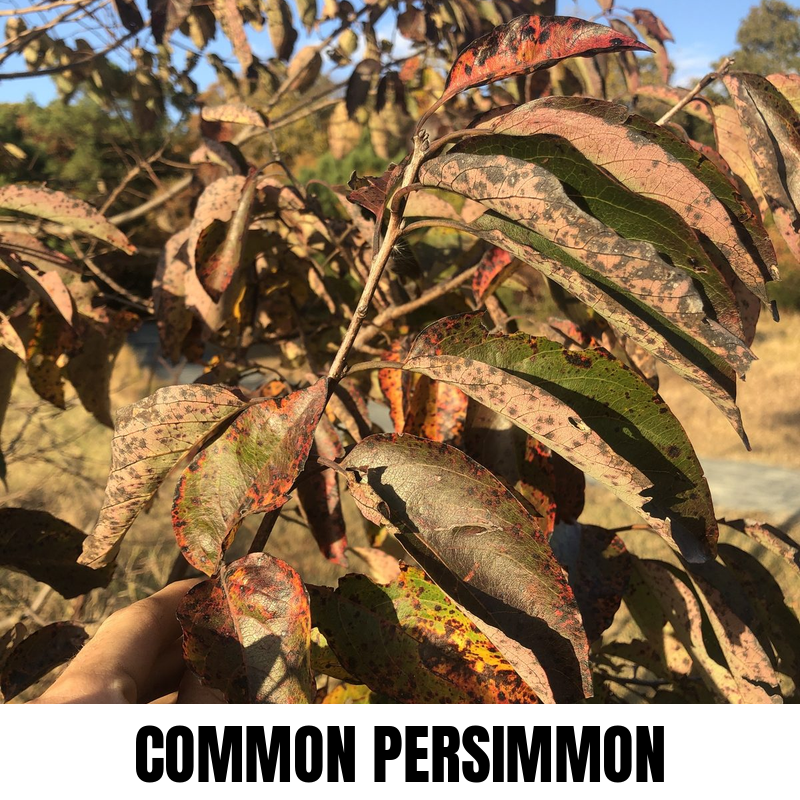
Brush - Range & Pasture - Common Persimmon
BES-TEX BRUSH ID GUIDE
Common Persimmon
Eastern Persimmon
Diospyros virginiana
Plant Type
Shrub or small tree; persimmon family (Ebenaceae)
Life Cycle
Perennial; native
Leaf Habit
Deciduous
Typical Height
15 to 20 ft in old fields; up to 80 ft on the best soils (Texas A&M)
Photo Gallery
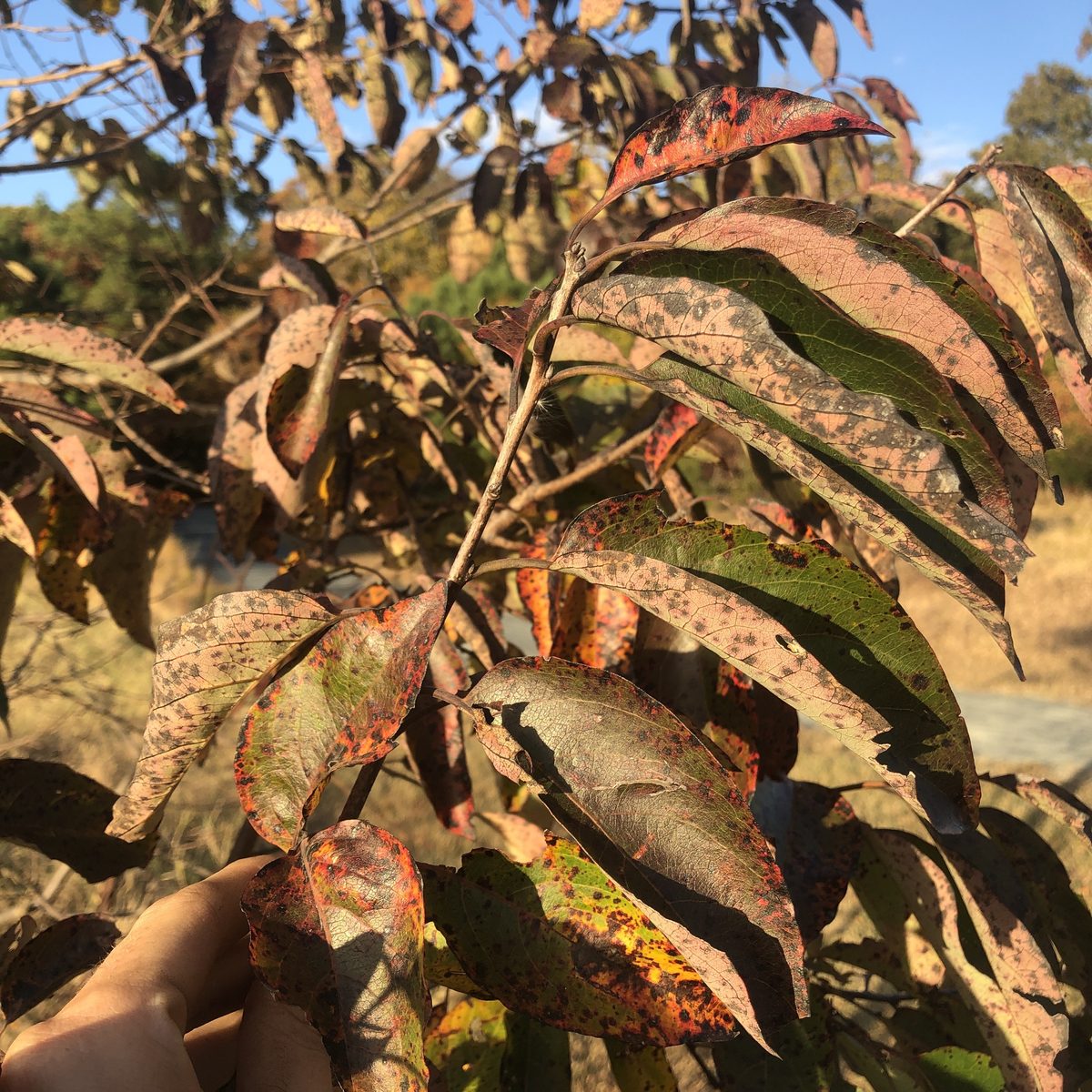

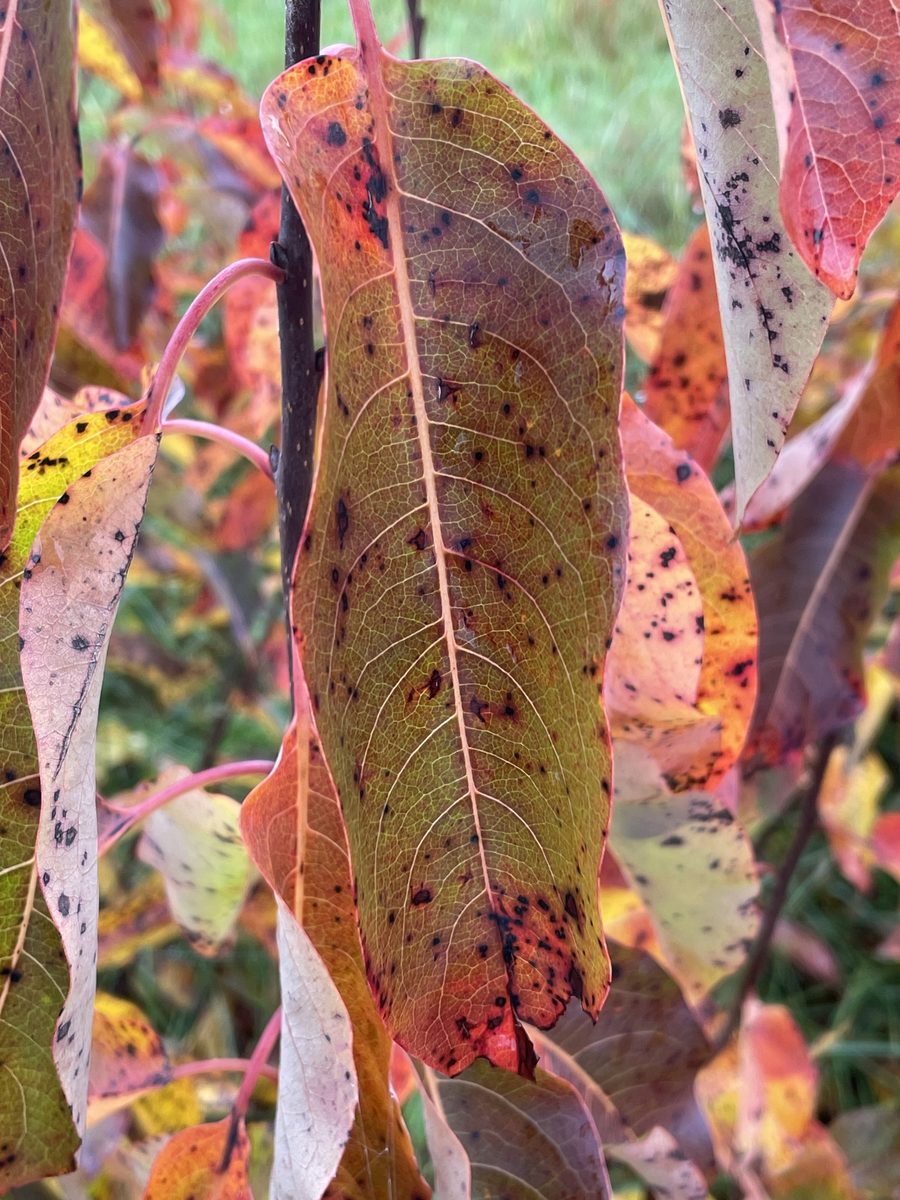

How to Identify It
Quick ID
Bark
- Brown to black, deeply furrowed
- Ridges broken into checkered, block-like sections (Texas A&M)
Leaves
- Simple, alternate, smooth-edged, deciduous (Texas A&M)
Flowers
- Bell-shaped, yellow to green, often hidden by leaves
- Bloom March through June (Texas A&M)
Fruit
- Green, then yellow-orange, then purple to black when ripe
- 4 to 8 hard, flat brown seeds (Texas A&M)
Look-Alikes
Texas Persimmon
- Texas persimmon has smooth, slick gray bark and small black fruit; common persimmon has blocky checkered bark and orange fruit (Texas A&M)
Counter script: "If it is a tree with dark blocky checkered bark, smooth oval leaves, and orange-to-purple fruit, it is most likely common persimmon."
Where It Grows
Texas
- Eastern and central parts of Texas (Texas A&M)
- Ecoregions (Texas A&M): Pineywoods, Gulf Prairies and Marshes, Post Oak Savannah, Blackland Prairies, Cross Timbers and Prairies, Edwards Plateau
Oklahoma
- Eastern half of the state (OSU)
New Mexico
- [PLACEHOLDER]
Sites and soils: Most soils from sand to shale and muddy bottomlands; best in moist, rich soils. Dry woods, old fields, and clearings (Texas A&M).
Best Time to Control
Texas A&M: defoliation treatment is most effective in May when the leaves are fully expanded. The Surmount and PastureGard HL labels list broadcast timing for persimmon from late summer through fall.
Common persimmon is a woody perennial. No pre-emergent herbicide controls common persimmon.
Treatment Methods
Foliar (Leaf) Spray
- Example products: Surmount or PastureGard HL (Corteva); eastern persimmon is listed on both labels
- PastureGard HL high-volume mix (label): 0.5 to 1% + 1 qt nonionic surfactant per 100 gal
- Surmount mix: follow the label
Basal Bark (Stem) Spray
- Example products: Remedy Ultra or PastureGard HL (Corteva); eastern persimmon is listed on both labels
- PastureGard HL streamline basal (label): 25% + 10% penetrant in oil, a 2 to 3 inch band 12 to 24 inches above the ground
- Remedy Ultra low-volume basal (label): 20 to 30% in oil
Cut Stump
- Treat the cut surface right away
- PastureGard HL (label): 25% in oil
- Remedy Ultra (label): 20 to 30% in oil
Individual Plant vs. Broadcast
- Surmount and PastureGard HL are labeled for broadcast; follow the label
- Density guidance: [PLACEHOLDER]
Product names are examples only. Always read and follow the product label. For product selection and help, contact BES-TEX at 325.653.1300.
Sources: Surmount label, EPA Reg. No. 62719-480; PastureGard HL label, EPA Reg. No. 62719-637; Remedy Ultra label, EPA Reg. No. 62719-552; Texas A&M Plants of Texas Rangelands; Oklahoma State University Extension.