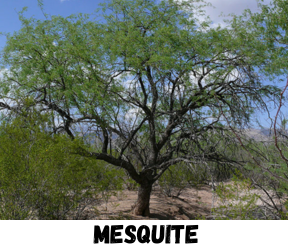
Brush - Range & Pasture - Mesquite
BES-TEX BRUSH ID GUIDE
Mesquite
Honey Mesquite & Western Honey Mesquite
Prosopis glandulosa & P. glandulosa var. torreyana
Plant Type
Thorny shrub or small tree; legume family (Fabaceae)
Life Cycle
Perennial; native
Leaf Habit
Deciduous
Typical Height
Honey mesquite: up to 25 ft (NMSU)
Western honey mesquite: [PLACEHOLDER]
Photo Gallery
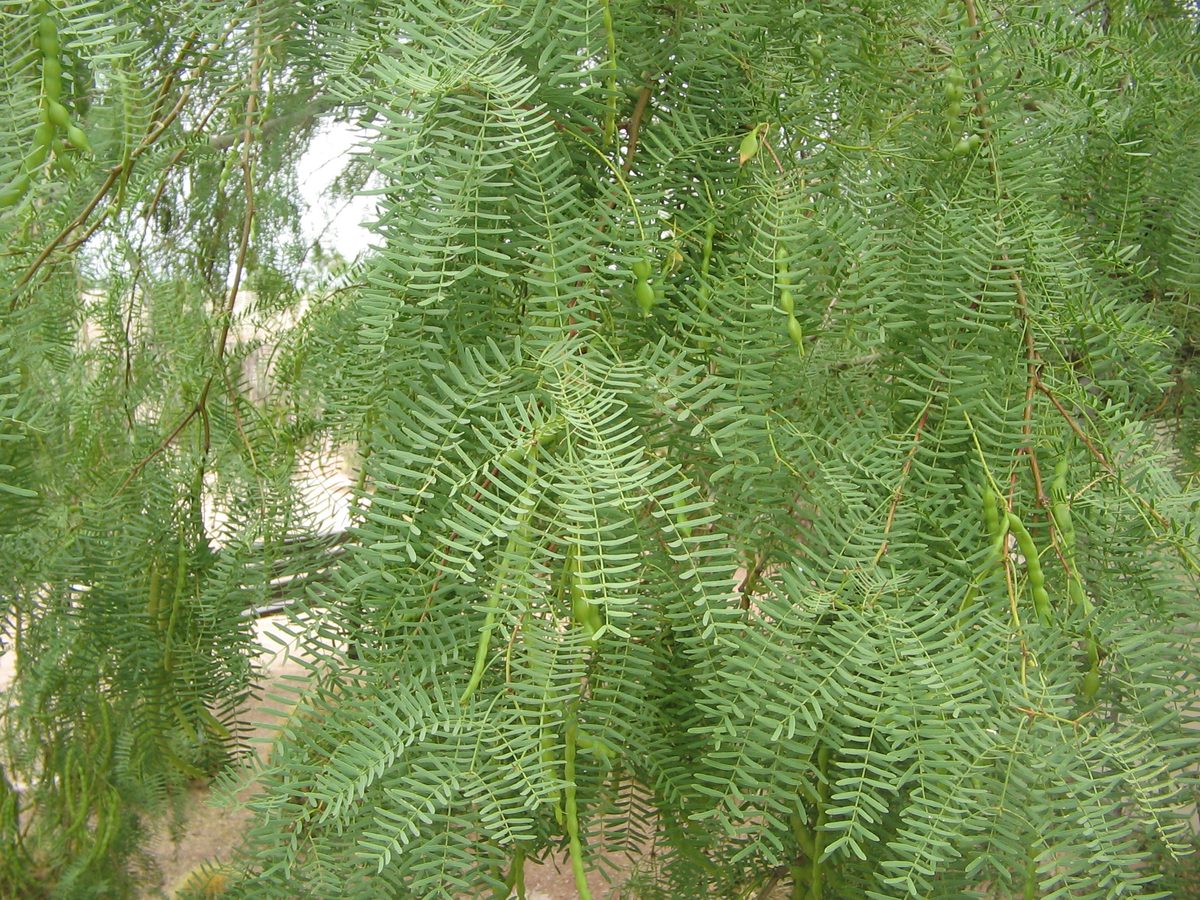

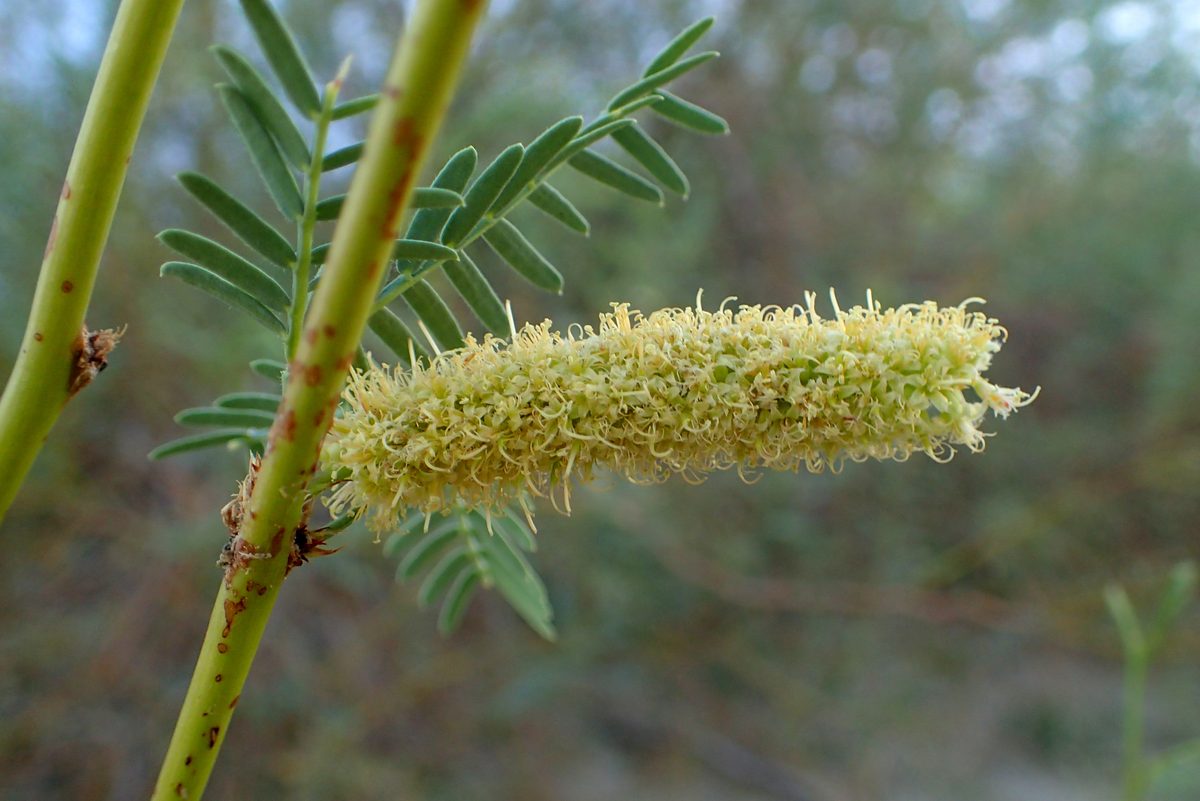

How to Identify It
Quick ID
Leaves
- Alternate, bipinnately compound (twice-divided)
- Narrow, smooth leaflets with smooth edges
- Leaflets 1 to 3 cm long (OSU)
Thorns & Branches
- Zigzag branches with short spurs
- Stout spines on the branches
- Crooked, drooping branches (NMSU)
Flowers
- Woolly, "caterpillar"-like flower tassels
- Creamy white to pale yellow
- Bloom: May to June in Oklahoma (OSU)
Pods (Beans)
- Long, segmented bean pods
- Up to 8 to 10 inches long (Texas A&M)
- Start yellow and turn brown with age (NMSU)
Look-Alikes
Huisache
- How to tell it apart from mesquite: [PLACEHOLDER]
Catclaw
- How to tell it apart from mesquite: [PLACEHOLDER]
Counter script: "If it is a thorny shrub or tree with zigzag branches, feathery twice-divided leaves, and long segmented bean pods, it is most likely mesquite."
Where It Grows
Texas
- Found generally throughout Texas; common on dry ranges across the state (Texas A&M)
- Honey mesquite is the most widespread type in Texas
Oklahoma
- Western half of the state (OSU)
New Mexico
- Western honey mesquite regions where predominant: [PLACEHOLDER]
Sites and soils: Grows well in many soil types except deep sands and soils that stay wet for long periods. Found at elevations up to 4,500 feet across the southwestern U.S. (Texas A&M AgriLife).
Best Time to Control
Per Texas A&M AgriLife, foliar (leaf) sprays work best when:
- Soil temperature at 12 to 18 inches deep is above 75°F
- Leaves have changed from light pea-green to a uniform dark green, with no significant drought, hail, or insect damage
- About 45 to 90 days after bud break, when the plant moves sugars down to the roots
- Recent rains have not pushed out new leaves
- All bean pods are fully elongated and all flowers are yellow, not white
Brush Busters leaf spray season: spring leaf color change through July 31 in East and South Texas; other parts of the state may spray through September. Basal treatments can be applied any time of year. AgriLife West Texas research also found that a healthy, full-leaf, mature tree matters more than hitting the exact soil temperature.
Mesquite is a woody perennial. No pre-emergent herbicide controls mesquite.
Treatment Methods
Foliar (Leaf) Spray
- Best for bushy plants with a good leaf canopy, under 6 ft tall, and for multi-stemmed plants with more than 3 stems
- Wet all leaves until they glisten, not drip
- Example product: Sendero (Corteva)
- Mix: Sendero 1% (1.28 oz per gallon of water) + surfactant 1/4% + blue marker dye 1/4 to 1/2%
- When: start when mesquite leaves turn dark green or soil temperature reaches 75°F at 12 inches deep. Stop during bean (pod) production. Slow down in the fall, when the plant takes up less product.
Basal Bark (Stem) Spray
- Best for young plants with smooth bark and 3 or fewer basal stems
- Spray all sides of each stem from ground level up to about 12 inches
- Example products: Remedy Ultra or PastureGard HL (triclopyr + fluroxypyr), both Corteva
- Remedy Ultra mix (in diesel or basal bark oil): 15% (19 oz + 109 oz carrier per gallon) for smooth bark 1.5 in or less; 25% (32 oz + 96 oz carrier) for smooth bark 1.5 to 4 in or rough bark
- PastureGard HL mix: 25% in diesel, kerosene or basal oil carrier (with 10% penetrant), applied as a 2 to 3 inch band 12 to 24 inches above the ground
Cut Stump
- Cut every stem flat, close to (not below) the soil surface
- Brush off soil and sawdust, then treat the cut surface and sides right away
- Example products: Remedy Ultra or PastureGard HL (triclopyr + fluroxypyr), both Corteva
Individual Plant vs. Broadcast
- Under about 400 plants per acre, small trees: individual plant treatment or grubbing
- Over 400 plants per acre: broadcast, such as aerial spraying
- Plan follow-up: retreatment may be needed every 3 to 7 years
Product names are examples only. Always read and follow the product label. For product selection and help, contact BES-TEX at 325.653.1300.
Sources: Brush Busters: How to Beat Mesquite (Texas A&M AgriLife) for Sendero and Remedy Ultra mixes; Sendero timing per BES-TEX; PastureGard HL product label, EPA Reg. No. 62719-637 (mesquite listed; basal bark and cut stump); Texas A&M AgriLife Extension (Mesquite Ecology and Management; Brush Busters: How to Beat Mesquite; How to Avoid Lumps When Treating Cut Stumps; Rangeland Herbicides chart; West Texas Rangelands); Texas A&M Plants of Texas Rangelands; Oklahoma State University Extension; NMSU Extension Guide H-179.