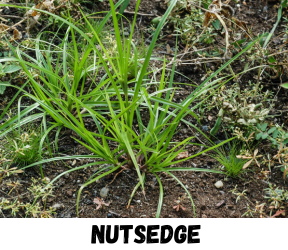
Sedges - Zoysia Lawn - Nutsedge
BES-TEX WEED ID GUIDE · SEDGES
Nutsedge
Nutsedge (Yellow & Purple)
Common Name
Yellow Nutsedge, Purple Nutsedge
Latin Name
Yellow Nutsedge – Cyperus esculentus
Purple Nutsedge – Cyperus rotundus
Family
Cyperaceae
Life Cycle / Type
Perennial · Sedge
What Is It?
Nutsedge is a perennial sedge, not a true grass. It has upright, glossy leaves, grows faster than the turf around it, and has a triangular stem. Yellow nutsedge is yellow-green, grows more upright, and its leaves taper to a sharp, pointed tip. Purple nutsedge is darker green, with stiffer leaves and more aggressive growth, and it is the hardest of the two to control. Nutsedge spreads underground by tubers, rhizomes, and chains of nutlets, which is why it is so persistent in turf. It thrives in over-watered, compacted clay soils and starts coming up once the soil warms above 65°F. Quick ID: a long, pointed leaf tip means yellow nutsedge, and a blunt, rounded tip means purple nutsedge.
These are perennial weeds. Pre-emergent herbicides do not control existing sedges or their underground tubers.
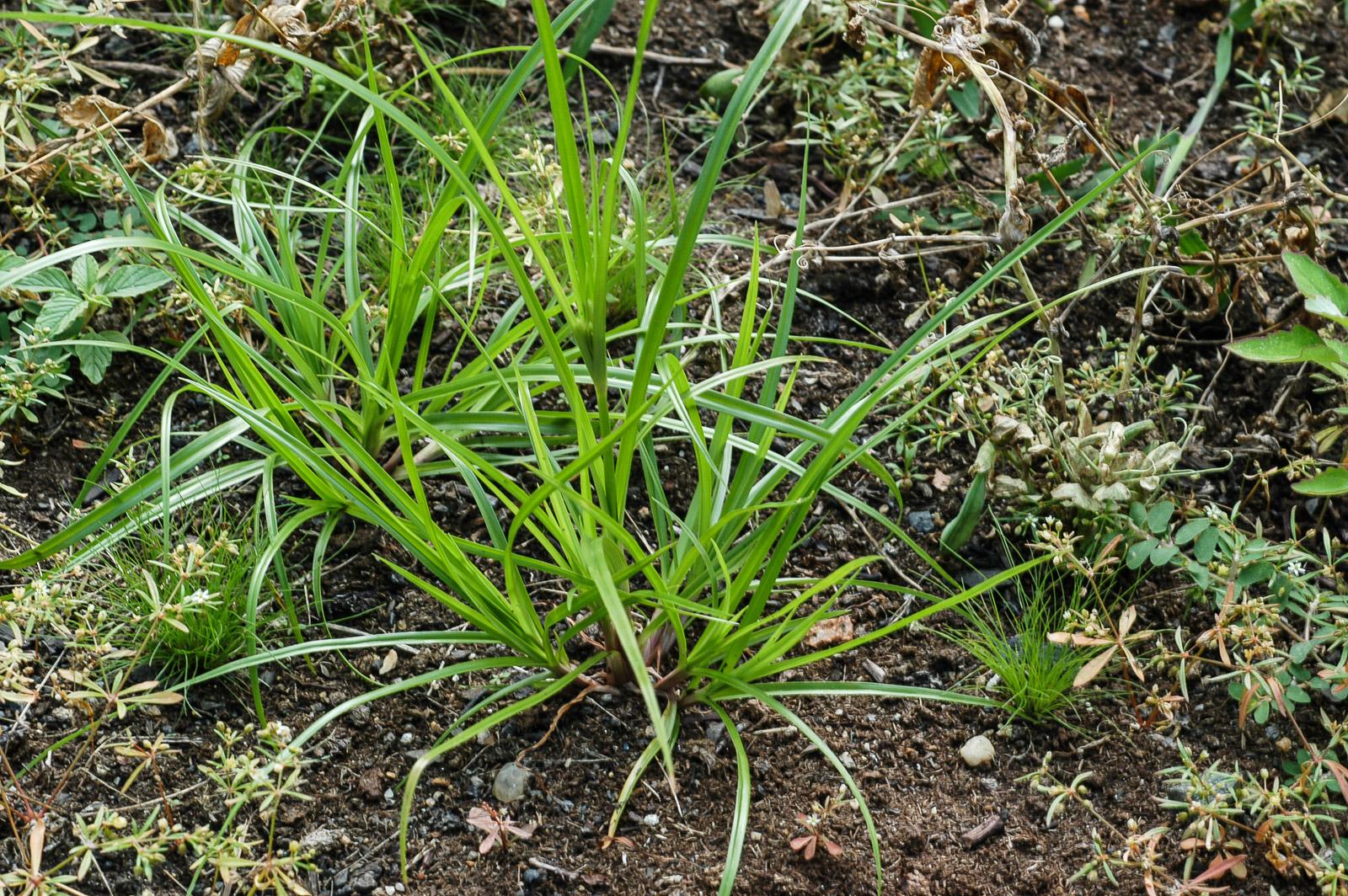
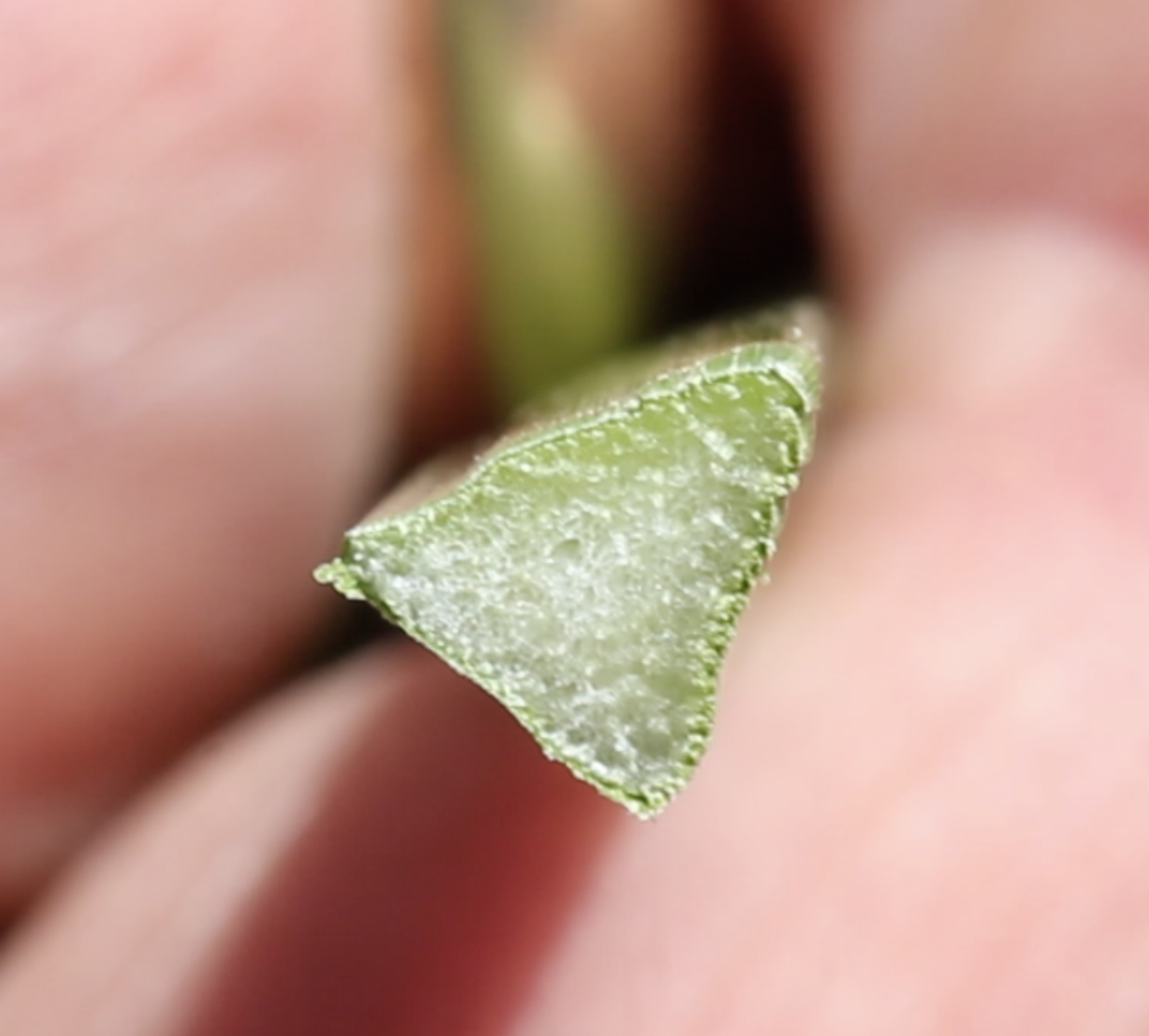
Leaf Shape Identification (Quick ID)
Yellow Nutsedge (Cyperus esculentus)
- Leaf tip: Pointed
- Leaves taper to a sharp tip
- Color is yellow-green
- Grows more upright
Purple Nutsedge (Cyperus rotundus)
- Leaf tip: Blunt, rounded
- Leaves end abruptly in a blunt, boat-shaped tip
- Darker green than yellow nutsedge
- Stiffer leaves, more aggressive growth
- Most difficult to control
One-Sentence Counter Script“If the leaf tip is long and pointed, it’s yellow nutsedge. If it’s blunt and rounded, it’s purple nutsedge.”
No pre-emergent can control sedge, because it grows from underground tubers, not from seed.
Yellow or Purple?
Yellow Nutsedge
Pointed tip
Purple Nutsedge
Rounded tip
Irrigation & Soil Compaction Note
Nutsedge thrives in over-irrigated and compacted soils. Constant moisture from broken or misaligned sprinklers, poor drainage, and tight clay soils creates ideal conditions for sedges to spread. Even effective herbicide applications will struggle if excess water and compaction are not corrected.
Reducing irrigation, fixing sprinkler issues, improving drainage, and relieving soil compaction are critical steps in long-term control.
“Nutsedge loves water and compacted clay. If irrigation and compaction aren’t fixed, it will keep coming back.”
Soil Temperature & Germination
Sedges emerge and spread as soils warm and moisture increases.
Above 65°F
Emergence begins
Warm, moist soils
Rapid spread and increased pressure
Decision Question
Is the nutsedge visible above the soil right now?
NO
It has not emerged.
No pre-emergent can control sedge, because it grows from tubers, not from seed.
Pre-Emergent Herbicide BMPWhy This Weed Comes Back
Underground tubers and rhizomes
Excess moisture or poor drainage
Thin or stressed turf
Learn the Basics
A healthy, thick lawn is the best defense against weeds.